Showing posts with label stock photography. Show all posts

Thursday, August 5, 2010

Using Conceptual Images

When dealing with stock photography and design, there are several routes you can choose when selecting images to illustrate your idea. You can go for the run of the mill image, i.e. businessman on a cell phone. Or you can go another route and search for something much more conceptual to convey your point.

So let’s say the concept you are shooting for is business communication. If you go for the aforementioned businessman on a cell phone, you are playing it safe. Nothing will be misinterpreted and you will have an enormous selection of images to choose from.

On the other hand, this is such a common way to portray business communication that it might not have the impact that a more attention-grabbing image would have. It is a little more risky since your intended message may not be completely clear by the photo alone, but if it is intriguing enough it will lure your audience in and make them want to know your message.

Take a look at the images below. Watch them go from straight forward to uber-conceptual! It’s all in how you use them.


Tuesday, August 3, 2010

11 Ways to Celebrate Shark Week

1. Don’t get attacked by a shark.
2. Don’t attack a shark. The chances of them attacking you are slim, so let’s call it even.
3. Smile and appreciate your one row of pretty teeth, instead of the multiple rows that sharks have. And if you have some shark teeth happening in there, smile anyway. They look cool!

4. Refer to every person you meet as “chum”.
5. Make that Jaws “duh-nuh” sound every time you walk up behind somebody.
6. Anytime a challenge arises, quote Roy Scheider from Jaws saying, “You’re gonna need a bigger boat.”
7. Don’t eat a Great White shark. They are known to have high mercury levels which could leave you mad as a hatter.
8. Pretend that if you have to be in constant motion to keep breathing, like most sharks. Then, when you are out of breath in about 10 minutes, take a nap.
9. Tell your kids that they are lucky that you feed them. Baby sharks have to find food on their own. After they call you “lame” or a “nerd”, make them dinner anyway.
10. Go around knocking on people’s doors and when they ask who it is, you say, “Land Shark”.
11. Hug a shark. Wait!!! On second thought. Look at a shark . . . through aquarium glass . . . from far away. Or even better still, maybe just some photos.

Keywording Tips for Stock Photographers, Part 5: Synonyms are Your Friend

Another week, another keywording tip for all you stock photographers out there. If you haven’t already, make sure to check out our previous installments (entries, parts, chapters).

Which leads me to this week’s topic (theme, subject, focus). When it comes to keywording stock images, synonyms are your friend (pal, buddy, mate). There are hundreds of things out there that can be referred to by more than one word. As a stock photographer, you have no way of knowing which word your customers will use in their searches.


This problem (quandary, dilemma, obstacle) is magnified when you think about the international stock photography market. Even nations that speak the same language don’t always use the same words (Are your potential buyers looking for a truck or a lorry?).

This doesn’t mean that you need to spend hours keywording a stock image (photo, photograph, picture) with every possible word variation. But it is a good idea to include some common synonyms in your keywords lists, especially for stock images of popular subjects (think cell phone, cellular phone, mobile phone).

Least Scary Animals to Photograph

After giving you all nightmares with “Scariest Animals to Photograph”, we thought we’d take it easy on you and give you something a little less horrifying to look at. Well, some might be horrifyingly cute, but that’s a risk we were willing to take.

The only danger involved with photographing these animals is an extreme case of the warm fuzzies. So, without further ado, here are the least scary animals we could find:


Lambs – Almost cute enough to give you a stomach ache. Of course, they grow up and lose some of their cuteness, so enjoy it while you can.


Marmots – This chubby, little guy isn’t too intimidating. And he’s just the right amount of ugly to make him cute. Watch him nibble on a graham cracker for further proof.


Penguins – It’s hard to feel too threatened by anything that clumsily waddles around like that and can’t fly.


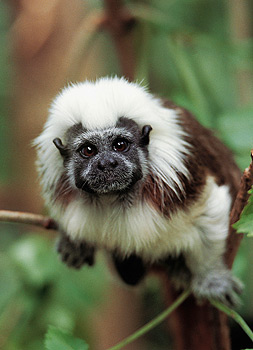
Cotton-Top Tamarins – Nothing that begins with the word “cotton-top” will ever be scary.


Hedgehogs – Sure, they have spines running along their back, but they are not barbed or poisonous. Besides, their defense mechanism is to roll up into a ball. Not exactly anything to be scared of. Just don’t step on him.


Bunnies – I think the picture takes care of it pretty well.

Tuesday, July 27, 2010

Scariest Animals to Photograph

Whether they make your skin crawl or make you want to run for your life, there are some animals that are just plain scary. For photographers, it can be even worse. They have to sometimes fight their natural instinct and become comfortable enough to photograph these animals.

From the life-threatening to the creepy, here are the animals that give us nightmares.

Snakes - Especially cobras. Venomous and intimidating. It’s not that we don’t trust them or anything, but it’s also not exactly the best recipe for close-up photograpghy.


Spiders – Classic scary. Any kind of spiders. Too many eyes and too many legs to not not be frightening. The fatter and harrier, the scarier.


Sharks – Particularly the Great White Shark. With the added challenge of being underwater, sharks make for a frightening subject. Maybe it’s the movie, or maybe it’s the rows of sharp, razor-like teeth. Although they are unlikely to attack, we have no desire to swim up and give them a big hug either.


Lions - The perfect image of ferocity. They are big and strong, and very likely faster than you. Get a camera with a great zoom.


Millipedes – Take the creepiness of a snake and add a couple hundred legs. No, thanks! And the Giant African Millipede can be almost 16 inches long!

Tuesday, July 6, 2010

Glow Welcomes 3 New Collections


We are pleased to announce the addition of 3 great collections to the Glow Images website: PhotoAlto, ZenShui, and es Collection.

The PhotoAlto collection features stylish and creative imagery while still being modern and practical. The collection covers a wide variety of subjects and styles.

ZenShui is a beautifully blended mix of eastern aesthetics with western themes. It brings a Zen-like quality to everyday subject matter.

The es Collection is known for its avant-garde styles and content. The imagery is often conceptual and creatively captured.

These newly launched collections add to the site’s already diverse and high quality content. Check out the site and explore!

Keywording Tips for Stock Photographers, Part 1: Why Does Keywording Matter?

Photographers are artists, but when they’re submitting their images to microstock sites, they also have to learn the technical side of the industry, including how to accurately assign keywords to stock images. As a professional keyworder with nearly four years of experience in the stock photography industry, I know that the one thing most keyworders will agree on is that there’s a lot of grey area when it comes to keywording stock images.

So what are keywords, and why do they matter? Keywords are descriptive words assigned to an image so that it can be found in a collection of stock images. Keywords are the words that stock photo buyers will enter into a search engine in order to find your images. For example, if a searcher enters the word “dog” into a search engine, the search results will be all the images that have the word “dog” assigned as a keyword.

Keywords are arguably the most important part of a stock photography submission (not that I’m biased or anything) because they allow your images to show up in search results. In other words, keywords are what allow your images to be seen by potential buyers. Customers can’t buy stock images that they can’t find.

Since keyword quality is directly related to sales, savvy photographers need to understand how to maximize the impact of their stock images’ keywords (and therefore, maximize their sales revenue).

In the coming weeks, the Glow Images blog will feature more articles exploring the ins and outs of keywording for stock photography. Keep checking back to find out how you can turn keywords into your stock images’ best assets!